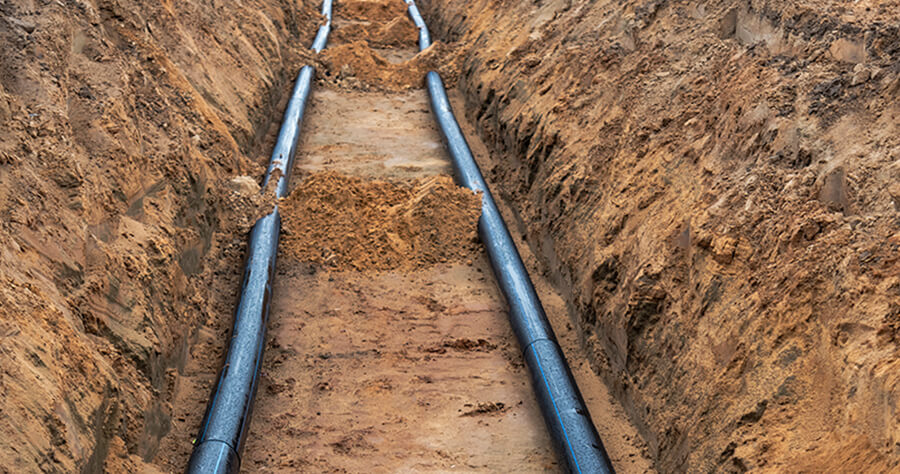
Although the use of overhead wires is widespread in most settlements, they have certain limitations.
Therefore, today the best option is the use of underground cables. You can find them in various forms and with different numbers of conductors. For example, there are standard PVC types with 1–4 conductors made of copper, and some variants made of aluminum. In addition, it is important to note that copper cables are more reliable compared to other types because copper is a highly conductive material. Furthermore, there are other classifications based on the cable’s voltage capacity. Generally, you can choose low-voltage underground cables suitable for transmitting up to 1 kilovolt and high-voltage types designed for 11 kilovolts.
Advantages of Underground Electrical Cables for Homes
As you know, overhead wires are not always practical and safe for every building and in some areas they are not permitted. Therefore, here are some advantages of underground cables:
Improved Aesthetics
Frankly speaking, overhead cables spoil the neat appearance of an area when not properly installed. Moreover, they look unpleasant. However, when underground cables are used, the area looks neater and more aesthetically appealing. In addition, an excessive number of tangled wires not only looks bad but is also unsafe due to electrical hazards.
Higher Durability
Unlike overhead wires, underground PVC cables are stronger, more durable, and last for many years. This is because they are not exposed to damage caused by external climate factors such as rain, storms, or strong winds. There are different types of underground electrical cables, and since they are installed beneath the ground, power outages are significantly reduced. Thus, when your exams are approaching or when you are watching your favorite show or game, the likelihood of a power outage is very low because underground cables are more durable and efficient.
Safe for Houses and Apartments
Electrical hazards are widespread in buildings and homes that use overhead wires. Therefore, living in a home equipped with overhead cables that can cause electrical short circuits is dangerous. This is not safe for you or your family. The underground cable system is safer compared to overhead wiring because it is not accessible to people or external factors. In addition, the likelihood of electric shock or related accidents is very low. Later, you should purchase high-quality underground cables from Interkabel and ensure they are installed by a professional electrician.
Low Maintenance Costs
Since the underground electrical cable is located beneath the ground, maintenance costs are significantly lower because the cable is protected from potential damage. The cables are not exposed to weather conditions such as rain, snow, lightning, storms, and hurricanes. Imagine the condition of overhead wires after a strong storm — all broken, damaged, and tangled. In addition to safety issues, you would also have to spend a lot of money on maintenance.
Installation of Underground Cables
You have already learned about the advantages of the underground cable system; now it is important to learn how you can install underground cables for your home or building. You can install an underground cable system in different ways depending on the local regulations of your area or community. Generally, underground cables are installed either by direct burial in the soil or by using a special conduit system. Whichever method you choose, both techniques are similar and not very complicated. Of course, you will need the help of a professional technician to lay underground cables.
Types of Conduits Used in Underground Electrical Cables
When laying underground cables for your home or building, there are two types of conduits you can use. These are:
Rigid Metal Conduit
For an underground cable system, you can use a steel-coated, thick conduit. This material is heavy and can withstand harsh weather conditions and environments. These conduits are ideal for high-traffic areas and industrial zones. However, rigid metal conduits are more expensive than PVC types, which is why people more often prefer PVC variants.
PVC Conduit
PVC conduits are widely used in underground cable systems, and we at KEI Industries also recommend them. The reason is that these conduits are cost-effective and made from very lightweight materials. You might think why a less durable lightweight conduit should be chosen. No, even though PVC conduits are lightweight, they are quite durable due to their resistance to water and weather conditions.
Using a conduit that is suitable for your purpose and safe will make laying underground PVC cables more convenient for you.
